
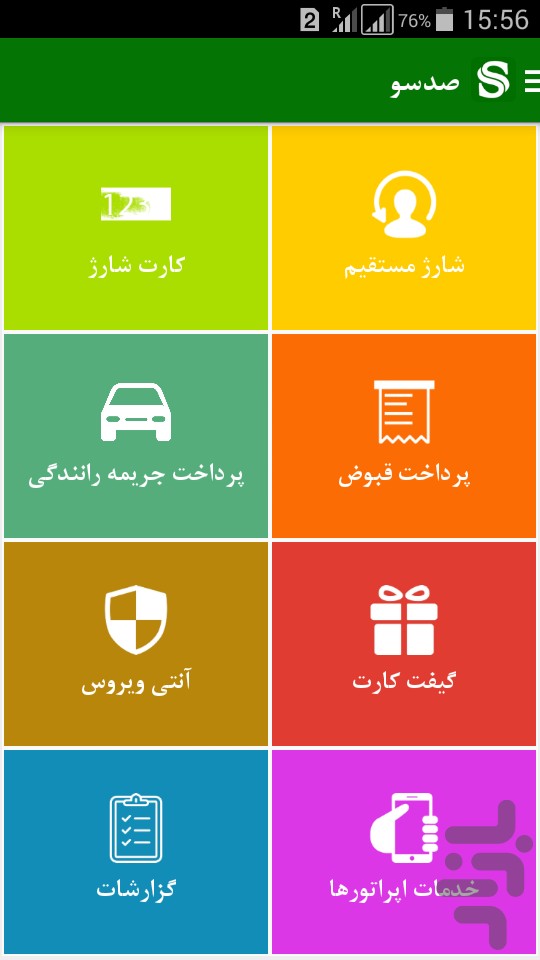
اپلیکیشن اندروید فروش شارژ و پرداخت قبوض بدون اینترنت صدسو با امکانات متنوع
به این مطلب امتیاز بدهید:
موضوعات مرتبط با این مطلب :
برچسب ها: اپلیکیشن اندروید فروش شارژ و پرداخت قبوض صدسو با ظاهری زیبا و امکانات متنوع,امکان خرید آنلاین و آفلاین,خرید آسان کارت شارژ های ایرانسل,همراه اول,تالیا و رایتل,وارد کردن رمز شارژ فقط با یک کلیک,امکان شارژ اتوماتیک تاپ آپ,خرید گیفت کارت آیتونز,مایکروسافت,خرید آنتی ویروس,خرید بسته اینترنت ایرانسل,پرداخت قبوض آب,برق,گاز,تلفن ثابت,تلفن همراه,عوارض شهرداری,امکان استعلام آنلاین قبض سیم کارت دائمی همراه اول,مجهز به سیستم بارکدخوان جهت ورود اطلاعات سریع قبض,ذخیره اطلاعات شارژهای خریداری شده و قبض های پرداخت شده,دریافت اطلاعات تماس,یکبار برای همیشه,پرداخت وجه از طریق درگاه های بانکی مختلف,امکان موجودی گیری از سیم کارت با یک کلیک,امکان اشتراک گذاری اپلیکیشن از داخل آن
دانلود رایگان کتاب مصاحبه حضوری شرکت های تابع وزارت نفت و نیروگاه
مبانی پمپ ها
اطلاعاتی در مورد سیالات
انتقال حرارت و مبدل های حرارتی
ترمودینامیک و قانون های اصلی
برج ها جداسازی و پدیده انتقال
پدیده های کنترلی
کمپرسورها
انواع مخازن
خوردگی
اطلاعات متفرقه
پرسش ها و پاسخ ها
بخش روانشناسی
به این مطلب امتیاز بدهید:
موضوعات مرتبط با این مطلب :
برچسب ها: دانلود رایگان کتاب مصاحبه حضوری شرکت های تابع وزارت نفت و نیروگاه,راهنمای شرایط مصاحبه حضوری,مبانی پمپ ها,اطلاعاتی در مورد سیالات,انتقال حرارت و مبدل های حرارتی,ترمودینامیک و قانون های اصلی,برج ها جداسازی و پدیده انتقال,پدیده های کنترلی,کمپرسورها,انواع مخازن,خوردگی,اطلاعات متفرقه,پرسش ها و پاسخ ها,بخش روانشناسی
دوره آموزشی تئوری لوله کشی صنعتی
دوره آموزشی تئوری لوله کشی صنعتی
 لینک دانلود
 – آشنائی با مقدمات و تعاریف اولیه و مدارک بخش
، Line list ، P&ID ، Isometric ، Piping plan ، Key plan ، Plot plan 2 – آشنائی با مدارک
و .... Pd-info ، Standard pipe support ، Valve list
Piping 3 – معرفی کدها و استانداردهای معمول در طراحی
4 – روش محاسبه و تعیین ضخامت جدار لوله ها و اتصالات و کلاس کاری شیرها و فلنجها
Piping 5 – معرفی و تشریح اقلام و اتصالات نرمال و خاص مورد استفاده در
در اطراف تجهیزات مختلف و الزامات مربوطه Piping 6 – آموزش روشهای طراحی
Process & Mechanical & Vendor data sheet 7 – آشنائی با مدارک
و الزامات مربوطه Pipe Rack 8 – آموزش روشهای طراحی
و اصول انتخاب جنس Piping 9 – آشنائی با جنس های مورد استفاده در
و اهمیت تهیه این مدرک در هر پروژه PMS 10 – آشنائی با مدرک
11 – آموزش روش ساپورت گذاری لوله ها و آشنائی با انواع مختلف نگهدارنده های لوله
12 – تئوری آنالیز تنش در سیستم های لوله کشی صنعتی
(U/G) 13 – اصول طراحی سیستم های لوله کشی زیرزمینی
(Design to Cost) 14 – انتقال تجربیات شخصی در خصوص طراحی بهینه سایت های صنعتی
آشنائی با مقدمات و تعاریف اولیه
Piping -1-1 لزوم پیدایش تخصص
در یک پروژه صنعتی Piping -2-1 میزان کار و حدود قیمت
در برآورد قیمت و تهیه پیشنهاد فنی و مالی پروژه Piping -3-1 حدود کار بخش
-4-1 تشریح مراحل ابلاغ و اجرای یک پروژه صنعتی
پس از ابلاغ پروژه Piping -5-1 فعالیت های اصلی بخش
-6-1 تشریح مختصری از فعالیت سایر بخش ها پس از ابلاغ پروژه
Plant در طراحی Piping -7-1 مسئولیت بخش
Plant -8-1 سوابق کار مورد نیاز و اطلاعات عمومی جهت طراحی
-9-1 توجه به محل استقرار ساختمانها و تجهیزات صنعتی و گردش کار
-10-1 توجه به مسیر شبکه های زیربنائی و تقاطع و گردش مجاز جاده ها
-11-1 توجه به محدودیت های ارتفاعی سایت و امکانات رفاهی بهره برداران
Sleeper way یا Pipe rack -12-1 تصمیم گیری در مورد استفاده از
-13-1 توجه به مسیر حرکت ترنچ ها و لوپ های مورد نیاز
-14-1 طراحی محل های اسکان موقت در حین اجرای پروژه
-15-1 طراحی شبکه های آب و فاضلاب و دفع پساب جهت محوطه های اسکان موقت
-16-1 توجه به جهت باد قالب در منطقه و تاثیر آن بر جانمائی تجهیزات
-17-1 تصمیم گیری در مورد کفسازی محوطه های مختلف
-18-1 پیش بینی مسیرهای عبور جرثقیل و بوژی
-19-1 توجه به عدم امکان اجرای فونداسیون بر روی خاک دستی و توجه به ابعاد فونداسیون ها
و استفاده بهینه از این اختلاف ارتفاع Plant -20-1 توجه به اختلاف ترازهای محوطه
توجه به مسائل
Feed -23-1 تعیین محل ایستگاه های تقلیلل فشار گاز و یا دریافت
-24-1 مقاومت سازه ها در مقابل حریق
Alarm valve & gung -25-1 شبکه آتش نشانی محوطه و محل نصب
-26-1 شبکه آب خنک کننده محوطه و برج های خنک کن
-27-1 شبکه هوای فشرده ، بخار ، آب سرویس و نیتروژن مورد نیاز سایت
Utility station -28-1 پیش بینی محل نصب و پوشش مناسب واحدهای
Gas station , Weigh bridge , Container -29-1 پیش بینی تمهیدات خاص برای ساختمان های ویژه مانند
Preparation area
-30-1 بررسی عملی و اقتصادی بودن و لزوم نصب تجهیزات در ارتفاع و سازه های طبقاتی
-31-1 محدودیت های نصب تجهیزات در طبقات
-32-1 استفاده از سازه های بتنی یا فولادی و برآورد صرفه اقتصادی
در مرحله طراحی پایه Piping -33-1 معرفی مدارک تولید شده در بخش
Pipe sizing criteria *
Piping insulation schedule *
Pipe strength calculation *
Plot plan finalization *
P&ID mechanization *
Piping design instruction *
Piping material selection *
Preliminary pipes routing design *
Piping assembly drawingsو مسیرهای فرار اضطراری Retube -21-1 طراحی مسیرهای دسترسی به تجهیpd-info) *
Line numbering & Tag numbering procedure & Title blocks *
در مرحله طراحی دیتیل Piping -34-1 معرفی مدارک تولید شده در بخش
Piping material specification (PMS) *
Piping electronic specifications for 3d-modeling *
Piping conceptual layout *
Plant 3d-model *
Piping Arrangement drawings *
Piping isometric drawings *
Piping isometric drawings for fabrication *
Piping stress analysis report *
Standard pipe support & support list *
Pipe hanger schedule *
Safety valve & Silencer design report *
Line list *
Valve list *
POS for safety valve & silencer & the other elements *
Steam tracing & jacketing specification & drawings & details *
Final material take-off (MTO) *
Technical bid evaluation (TBE) & vendor document review (VDR) *
Painting schedule & color coding *
Sampling system design & sample cooler detail drawingsزات و فضاهای
plan 2 – آشنائی با مدارک
و .... Pd-info ، Standard pipe support ، Valve list
Plot plan -1-2 آشنائی با مدرک
North of plant *
Prevailing wind *
High point of paved area elevation *
Elevation from mean sea level *
Routing and coordination of the roads *
Routing of pipe racks and sleeper ways *
Routing of U/G trenches and it’s related loops *
Equipment coordination *
Equipment tag-no *
Equipment fixed and sliding saddle *
Equipment installation sections and elevations *
Structures coordination *
Structures tag-no *
Structures column numbers *
Structure and pipe rack sections and elevations *
Location , dimension and coordination of U/G pits *
Location , dimension and coordination of GPRS *
All utility and offsite buildings location , dimension and coordination *
The name of all equipment , structures and buildings *
آشنائی با مدرک
North of plant *
Drawing scale based on the contract requirements *
Zone , unit & area limits *
Coordination of each area limits *
A/G Zone , unit & area numbering *
U/G Zone , unit & area numbering *
Piping conceptual layout & Piping arrangement plan -3-2 آشنائی با مدرک
North of plant *
Drawing scale based on the contract requirements *
Area limits coordination *
Area limits references *
Equipment tag-numbers *
Equipment installation coordination *
Equipment nozzle chart *
Structures location & tag-numbers & column numbers *
Equipment coordination *
Equipment tag-no *
Equipment fixed and sliding saddle *
Equipment installation sections and elevations *
Structures coordination
Structures column numbers *
Platforms , ladders & stairs *
Elevation & height of all platforms , ladders & stairs *
All pd-info requirements *
All piping instruction requirements *
All contract requirements *
Piping routs *
Pipe line numbers & BOP or COP elevations *
All valves and fittings location *
All piping special items locations & tag-numbers *
Special requirements of piping around each equipment *
Control valve stations *
Utility stations and it’s related piping and details *
All pipe supports location & tag-numbers *
Instrument devices location & tag-numbers & detail of connections *
Tie-in points definition *
All required dimensions *
Interfaces by pipe rack area *
Elevation and coordination of tie-in points by U/G system *
Pits location and it’s related piping *
Fire fighting system
*
Sampling system piping & sample cooler details & location & coordination *
Reference drawings and documents *
Clash detection *
Piping Isometric -4-2 آشنائی با مدرک
North direction *
All piping , Valves and fittings *
Dimensions *
Welding or threading points numbering and location and quantity *
All connections coordination & elevations *
All pipes coordination & elevations *
Pipe supports location & tag-numbers *
Bill of material *
All pipe supports location & tag-numbers *
Piping special items tag-numbers *
Cut pipes definition *
Fabrication & erection items *
Commodity code
-5-2 آشنائی با مدرک
Equipment process information *
Line process conditions *
Line sizes *
Line numbers *
Line classes *
Line insulation *
Valve selection *
Piping fittings and special items *
Line to equipment & line to line connections *
Instrumentation *
Line list -6-2 آشنائی با مدرک
Line numbers *
Line classes *
Line sizes *
Line from-to *
Line process conditions *
Line base material *
Line specific material *
Hydro test and air test medium & pressure *
Line insulation class and thickness
*
Line P&ID number *
Line painting & color coding *
Manual valve list -7-2 آشنائی با مدرک
Valve tag-numbers *
Valve type *
Valve sizes *
Valve service *
Valve classes *
Valve rating *
Valve facing *
Valve process conditions *
Type of hand wheel operation *
Valve P&ID number *
Valve base material *
Valve specific material *
Standard & special pipe supports & pipe support schedule -8-2 آشنائی با مدرک
Support list and abbreviation *
Support details *
Support installation location & coordination in plant *
*
Pipe spring hangers *
Pd-info -9-2 آشنائی با مدرک
Structure single line diagram (SSLD) *
Pit single line diagram *
Equipment nozzle orientation *
Piping instructions -10-2 آشنائی با مدرک
Piping special details *
Piping general information for 3d-modeling *
Piping Assembly drawings *
Piping general notes *
-3 معرفی کدها و استانداردهای معمول در طراحی
به قرار ذیل میباشد : Piping -1-3 مهمترین کدهای مورد استفاده در طراحی
جهت طراحی خطوط لوله نیروگاه های حرارتی و سیکل ترکیبی : ASME B31.1 *
جهت طراحی خطوط لوله شبکه های توزیع گاز سوخت : ASME B31.2 *
جهت طراحی خطوط لوله در صنایع نفت و گاز و پتروشیمی : ASME B31.3 *
جهت طراحی خطوط لوله انتقال مایعات مختلف از جمله مایعات هیدروکربنی : ASME B31.4 *
جهت طراحی خطوط لوله سیستم های تبرید و سردخانه ها : ASME B31.5 *
جهت طراحی خطوط لوله انتقال و توزیع سیالات گازی : ASME B31.8 *
جهت طراحی لوله کشی سرویس های مختلف داخل ساختمانها : ASME B31.9 *
جهت طراحی خطوط لوله انتقال سیالات محلول مانند آب آهک : ASME B31.11 *
جهت طراحی بویلرهای نیروگاهی : ASME Section I *
مشخصات فنی مواد : ASME Section II *
جهت طراحی نیروگاه های هسته ای : ASME Section III *
جهت طراحی مخازن تحت فشار : ASME Section VIII *
به این مطلب امتیاز بدهید:
موضوعات مرتبط با این مطلب :
برچسب ها: دوره آموزشی تئوری لوله کشی صنعتی آشنائی با مقدمات و تعاریف اولیه و مدارک بخش,Line list,P amp ID,Isometric,Piping plan,Key plan,Plot plan 2 آشنائی با مدارک,و Pd info,Standard pipe support,Valve list,Piping 3 معرفی کدها و استانداردهای معمول در طراحی,4 روش محاسبه و تعیین ضخامت جدار لوله ها و اتصالات و کلاس کاری شیرها و فلنجها,Piping 5 معرفی و تشریح اقلام و اتصالات نرمال و خاص مورد استفاده در,در اطراف تجهیزات مختلف و الزامات مربوطه Piping 6 آموزش روشهای طراحی,Process amp Mechanical amp Vendor data sheet 7 آشنائی با مدارک,و الزامات مربوطه Pipe Rack 8 آموزش روشهای طراحی,و اصول انتخاب جنس Piping 9 آشنائی با جنس های مورد استفاده در,و اهمیت تهیه این مدرک در هر پروژه PMS 10 آشنائی با مدرک,11 آموزش روش ساپورت گذاری لوله ها و آشنائی با انواع مختلف نگهدارنده های لوله,12 تئوری آنالیز تنش در سیستم های لوله کشی صنعتی,U G 13 اصول طراحی سیستم های لوله کشی زیرزمینی,Design to Cost 14 انتقال تجربیات شخصی در خصوص طراحی بهینه سایت های صنعتی,آشنائی با مقدمات و تعاریف اولیه,Piping 1 1 لزوم پیدایش تخصص,در یک پروژه صنعتی Piping 2 1 میزان کار و حدود قیمت,در برآورد قیمت و تهیه پیشنهاد فنی و مالی پروژه Piping 3 1 حدود کار بخش,4 1 تشریح مراحل ابلاغ و اجرای یک پروژه صنعتی,پس از ابلاغ پروژه Piping 5 1 فعالیت های اصلی بخش,6 1 تشریح مختصری از فعالیت سایر بخش ها پس از ابلاغ پروژه,Plant در طراحی Piping 7 1 مسئولیت بخش,Plant 8 1 سوابق کار مورد نیاز و اطلاعات عمومی جهت طراحی,9 1 توجه به محل استقرار ساختمانها و تجهیزات صنعتی و گردش کار,10 1 توجه به مسیر شبکه های زیربنائی و تقاطع و گردش مجاز جاده ها,11 1 توجه به محدودیت های ارتفاعی سایت و امکانات رفاهی بهره برداران,Sleeper way یا Pipe rack 12 1 تصمیم گیری در مورد استفاده از,13 1 توجه به مسیر حرکت ترنچ ها و لوپ های مورد نیاز,14 1 طراحی محل های اسکان موقت در حین اجرای پروژه,15 1 طراحی شبکه های آب و فاضلاب و دفع پساب جهت محوطه های اسکان موقت,16 1 توجه به جهت باد قالب در منطقه و تاثیر آن بر جانمائی تجهیزات,17 1 تصمیم گیری در مورد کفسازی محوطه های مختلف,18 1 پیش بینی مسیرهای عبور جرثقیل و بوژی,19 1 توجه به عدم امکان اجرای فونداسیون بر روی خاک دستی و توجه به ابعاد فونداسیون ها,و استفاده بهینه از این اختلاف ارتفاع Plant 20 1 توجه به اختلاف ترازهای محوطه توجه به مسائل,Feed 23 1 تعیین محل ایستگاه های تقلیلل فشار گاز و یا دریافت,24 1 مقاومت سازه ها در مقابل حریق,Alarm valve amp gung 25 1 شبکه آتش نشانی محوطه و محل نصب,26 1 شبکه آب خنک کننده محوطه و برج های خنک کن,27 1 شبکه هوای فشرده,بخار,آب سرویس و نیتروژن مورد نیاز سایت,Utility station 28 1 پیش بینی محل نصب و پوشش مناسب واحدهای,Gas station,Weigh bridge,Container 29 1 پیش بینی تمهیدات خاص برای ساختمان های ویژه مانند,Preparation area,30 1 بررسی عملی و اقتصادی بودن و لزوم نصب تجهیزات در ارتفاع و سازه های طبقاتی,31 1 محدودیت های نصب تجهیزات در طبقات,32 1 استفاده از سازه های بتنی یا فولادی و برآورد صرفه اقتصادی,در مرحله طراحی پایه Piping 33 1 معرفی مدارک تولید شده در بخش,Pipe sizing criteria,Piping insulation schedule,Pipe strength calculation,Plot plan finalization,P amp ID mechanization,Piping design instruction,Piping material selection,Preliminary pipes routing design,Piping assembly drawingsو مسیرهای فرار اضطراری Retube 21 1 طراحی مسیرهای دسترسی به تجهیpd info,Line numbering amp Tag numbering procedure amp Title blocks,در مرحله طراحی دیتیل Piping 34 1 معرفی مدارک تولید شده در بخش,Piping material specification PMS,Piping electronic specifications for 3d modeling,Piping conceptual layout,Plant 3d model,Piping Arrangement drawings,Piping isometric drawings,Piping isometric drawings for fabrication,Piping stress analysis report,Standard pipe support amp support list,Pipe hanger schedule,Safety valve amp Silencer design report Line list,Valve list,POS for safety valve amp silencer amp the other elements,Steam tracing amp jacketing specification amp drawings amp details,Final material take off MTO,Technical bid evaluation TBE amp vendor document review VDR,Painting schedule amp color coding,Sampling system design amp sample cooler detail drawingsزات و فضاهای,plan 2 آشنائی با مدارک,و Pd info,Standard pipe support,Valve list,Plot plan 1 2 آشنائی با مدرک,North of plant,Prevailing wind,High point of paved area elevation,Elevation from mean sea level,Routing and coordination of the roads,Routing of pipe racks and sleeper ways,Routing of U G trenches and it s related loops,Equipment coordination,Equipment tag no,Equipment fixed and sliding saddle,Equipment installation sections and elevations,Structures coordination,Structures tag no,Structures column numbers,Structure and pipe rack sections and elevations,Location,dimension and coordination of U G pits,Location,dimension and coordination of GPRS,All utility and offsite buildings location,dimension and coordination,The name of all equipment,structures and buildings,آشنائی با مدرک,North of plant,Drawing scale based on the contract requirements,Zone,unit amp area limits,Coordination of each area limits,A G Zone,unit amp area numbering,U G Zone,unit amp area numbering,Piping conceptual layout amp Piping arrangement plan 3 2 آشنائی با مدرک,North of plant,Drawing scale based on the contract requirements,Area limits coordination,Area limits references,Equipment tag numbers,Equipment installation coordination,Equipment nozzle chart,Structures location amp tag numbers amp column numbers,Equipment coordination,Equipment tag no,Equipment fixed and sliding saddle,Equipment installation sections and elevations,Structures coordination,Structures column numbers,Platforms,ladders amp stairs,Elevation amp height of all platforms,ladders amp stairs,All pd info requirements,All piping instruction requirements,All contract requirements,Piping routs,Pipe line numbers amp BOP or COP elevations,All valves and fittings location,All piping special items locations amp tag numbers,Special requirements of piping around each equipment,Control valve stations,Utility stations and it s related piping and details,All pipe supports location amp tag numbers,Instrument devices location amp,tag numbers amp detail of connections,Tie in points definition,All required dimensions,Interfaces by pipe rack area,Elevation and coordination of tie in points by U G system,Pits location and it s related piping,Fire fighting system,Sampling system piping amp sample cooler details amp location amp coordination,Reference drawings and documents,Clash detection,Piping Isometric 4 2 آشنائی با مدرک,North direction,All piping,Valves and fittings,Dimensions,Welding or threading points numbering and location and quantity,All connections coordination amp elevations,All pipes coordination amp elevations,Pipe supports location amp tag numbers,Bill of material,All pipe supports location amp tag numbers,Piping special items tag numbers,Cut pipes definition,Fabrication amp erection items,Commodity code,5 2 آشنائی با مدرک,Equipment process information,Line process conditions,Line sizes,Line numbers,Line classes,Line insulation,Valve selection,Piping fittings and special items,Line to equipment amp line to line connections,Instrumentation,Line list 6 2 آشنائی با مدرک,Line numbers,Line classes,Line sizes,Line from to,Line process conditions,Line base material,Line specific material,Hydro test and air test medium amp pressure,Line insulation class and thickness,Line P amp ID number,Line painting amp color coding,Manual valve list 7 2 آشنائی با مدرک,Valve tag numbers,Valve type,Valve sizes,Valve service,Valve classes,Valve rating,Valve facing,Valve process conditions,Type of hand wheel operation,Valve P amp ID number,Valve base material,Valve specific material,Standard amp special pipe supports amp pipe support schedule 8 2 آشنائی با مدرک,Support list and abbreviation,Support details,Support installation location amp coordination in plant,Pipe spring hangers,Pd info 9 2 آشنائی با مدرک,Structure single line diagram SSLD,Pit single line diagram,Equipment nozzle orientation,Piping instructions 10 2 آشنائی با مدرک,Piping special details,Piping general information for 3d modeling,Piping Assembly drawings,Piping general notes,3 معرفی کدها و استانداردهای معمول در طراحی,به قرار ذیل میباشد Piping 1 3 مهمترین کدهای مورد استفاده در طراحی,جهت طراحی خطوط لوله نیروگاه های حرارتی و سیکل ترکیبی ASME B31 1,جهت طراحی خطوط لوله شبکه های توزیع گاز سوخت ASME B31 2,جهت طراحی خطوط لوله در صنایع نفت و گاز و پتروشیمی ASME B31 3,جهت طراحی خطوط لوله انتقال مایعات مختلف از جمله مایعات هیدروکربنی ASME B31 4,جهت طراحی خطوط لوله سیستم های تبرید و سردخانه ها ASME B31 5,جهت طراحی خطوط لوله انتقال و توزیع سیالات گازی ASME B31 8,جهت طراحی لوله کشی سرویس های مختلف داخل ساختمانها ASME B31 9,جهت طراحی خطوط لوله انتقال سیالات محلول مانند آب آهک ASME B31 11,جهت طراحی بویلرهای نیروگاهی ASME Section I,مشخصات فنی مواد ASME Section II,جهت طراحی نیروگاه های هسته ای ASME Section III,جهت طراحی مخازن تحت فشار ASME Section VIII
مبانی نقشه کشی لوله کشی piping
لینک دانلود در سایت صدسو
PIPING DRAWINGS BASICS
There are two types of views used in the piping drawings:
Orthographic- Plans and Elevations
Pictorial - Isometric Views
Piping layout is developed in both plan view and elevation view
and section details are added for clarity wherever necessary.
These drawings are called the General Arrangement of Piping.
In complex piping system, especially within the unit/plant building
where orthographic views do not illustrate the details of design,
pictorial view in isometric presentation is drawn for clarity.
HOW TO START THE PIPING GA?
•Obtain the drawings numbers and fill in the title block, with the
drawing number and title at the bottom right hand corner of the
sheet.
•Place the north arrow at the top left/right hand corner of the
sheet to indicate plant north.
•Do not plan drawing in the area above the title block of
drawing, as this is allotted for general notes, number and title of
reference drawings, brief description of changes during revision
and the bill of materials wherever applicable.
•Process equipment and piping have priority on the Piping GA.
•The piping drawings are started after fixing positions of the
equipments.
•Equipment layout is reproduced on the Piping GA to its scale
and drawn on the reverse side in case of manual drafting.
•In case of CAD separate layer is used. The major primary
beams and secondary beams are also shown if area covered is
indoor.
•Pertinent background details which govern piping routing,
such as floor drains, HVAC ducting, electrical and instrument
cable trays, etc. are also drawn in faint on the reverse.
•Utility stations are also established so that most convenient
utility header routing can be carried out.
Order of importance/preference of pipe lines in a piping
GA
Alloy steel/special material of construction.
Large bore piping
High temp/high pr. Piping
Lined piping
C. S. Process Piping
Utility piping
DEVELOPMENT OF PIPING GENERAL
ARRANGEMENT DRAWING
The piping drawings should be developed in such a way
that
all the process requirements are met with.
It is not always possible for the piping drawing to follow
exactly the logical arrangement of the P & IDs. Sometimes
lines must be routed with different junction sequence and
line numbers and subsequently the list may be changed.
•Performance and economics have to be considered in
parallel while deciding the routing.
Piping is represented by single lines up to a size of 150NB
and double lines for sizes 200NB and above. This is to save
the time of drafting and to avoid confusion.
In single line representation only the center line of the
pipeline is drawn using solid line and in double line
representation the actual size to scale is drawn with center
line marked in chain-dotted lines
Line numbers are shown against each line exactly in the
same way as represented in the P&I diagrams.
The change in specification should be shown in line with
P&I diagram. This change is usually indicated
immediately to the downstream of the valve, flange or
equipment.
Valves should be drawn to scale with identification
number from the P&ID marked thereon.
Draw valve hand wheels to scale with stem fully
extended.
If it is lever operated, then the movement of handle
position should be marked.
If a valve is chain operated, note the distance of the chain
from the operating floor.
Show location of each instrument connection with
encircled instrument number taken from P&ID.
Similar arrangement shall be shown as typical detail or
covered in a separate company standard as Instrument
Hook-up drawings.
Draw plan view of each floor of the plant and these views
should indicate how the layout will look like between
floors as seen from top.
Each line should be identified by line number and should
also show the insulation, tracing requirements, etc.
Lines, if required, shall be broken to show the required
details of hidden lines without drawing other views.
Do not draw details that can be covered by a note.
Draw plan to a larger scale for any part needing more
details and identify it as “Detail ‘A’”, etc.
Draw part isometrics sketches or part elevations to clarify
complex piping or piping hidden in the plan view.
•Full sections through the plant may be avoided if
isometric drawings are drawn for the lines. Part sections
where required shall be shown to clear the hidden details in
plan.
Sections in the plan views are identified by numbers say
1-1, 2-2, etc. and details by alphabets, e.g. “Detail ‘A’”.
Isometric drawing should also include the following
information:
Dimensions and angles.
Reference number of P & IDs, GA Drawings, line
numbers, direction of flow, insulation and tracing.
Equipment location and equipment identification.
Give nozzle identification on the connected equipment.
Give the details of flange on the equipment if the
specification is different from the connecting piping.
Size and type of every valve/ Direction of operation.
Size and number of control valve.
Location, orientation and number of each equipment.
Field weld - preferred in all directions to take care of site
variations. Can also be covered with a general note.
Location of high point vents and low point drains.
Covered with a standard arrangement note.
Bill of Material.
Requirements of stress relieving, seal welding, pickling,
coating, etc.
A spool is an assembly of fittings, flanges and pipes that
may be prefabricated. It does not include bolts, gaskets,
valves or instruments. A spool sheet is an orthographic
drawing of a spool drawn either from piping GA or from
an iso sheet. Each spool sheet shows only one type of
spool and,
•Instructs welder to fabricate the spool
•Lists the cut lengths of pipe, fittings and flanges etc.
needed to make the spool
•Gives material of construction and any special treatment
of finished piping
•Indicates how many spools of the same type are required
Sufficient dimensions to be given for positioning
equipment and for erecting piping.
Duplicating dimensions in different views should be
avoided, as this may lead to errors if changes are made.
Reserve horizontal dimensions for the plan view.
If single pipe is to be positioned or a pipe connected to
nozzle is to be indicated, then show the centre line
elevation and mark as C .
If several pipes are sharing a common support, show
elevation of Bottom of Pipes and mark as BOP EL. This
is more applicable to non-insulated lines.
In case of several pipes on a pipe rack, show the
“Top of Support” elevation and mark as TOS
EL.
In case of buried pipelines in trench, show
elevation of bottom of pipes.
In case of drains and sewers, the Invert Elevation
of the inside of the pipe is marked as IE.
Centre lines of the equipment and pipelines shall be
located with reference to the building column centre lines or
the co-ordinates which can be considered as a reference
base.
The distance between the lines shall be dimensioned centre
line to centre line.
•The horizontal nozzles on the equipment shall be located
from centre to flange face in plan. For vertical nozzles show
Face of Flange elevation (FOF).
For valves, instruments and non-standard equipments,
show the dimensions from flange face to flange face.
Flanged valves are located with dimension to flange faces. Nonflanged
valves are dimensioned to their centres or stems.
For flanged joints show a small gap between dimension lines to
indicate gasket. Flanged joints can also be shown without
gasket but
cover the same with a general note and include gasket thickness
in the valve or equipment dimensions.
For Finished Floor (FF) the elevation shall be the high point of
the floor.
For foundation the Top of Grout (TOG) elevation is shown.
Show dimensions outside the drawn view - do not cut
pictures.
Draw dimension line unbroken with fine line. Write
dimension just above the horizontal line. For vertical lines
write sideways.
The dimension lines can be terminated with arrow heads or
oblique dashes.
If series of dimension is to be shown, string them together.
Show overall dimension of the string of dimensions. Avoid
one of the break-up dimensions to omit repetition and error
during changes.
Do not omit significant dimension other than fitting make
up.
For field run piping, give only those dimensions which are
necessary to route piping clear of equipments and other
obstructions. Locate only those items which are important
to
the process.
Underline out of scale dimensions or mark as NTS.
Do not terminate dimensions at screwed or welded joints
Checking shall be done only on the print or the
check plot of the drawings and by coloured
pencils/pens.
Corrected areas and dimensions are marked yellow.
Areas and dimensions which are to be deleted are
marked green.
Areas to be corrected/incorporated on the drawing
are marked in red.
The new print after correction is “back checked” for
incorporation.
Points to be checked on the piping drawing includes:
Title of the drawing.
Title of the drawing.
Orientation - North arrow against plot plan.
Inclusion of graphic scale (if drawings is to be reduced).
Co-ordinates of equipments against equipment layout.
Equipment numbers and their appearance on the piping
drawing.
Correct identification on all lines in all views.
Line specification changes.
Reference drawing numbers and files.
Correctness of all dimensions.
Whether representation is correctly made in line with
the standard symbols or not.
Location and identification of all instruments.
Requirements of upstream/downstream straight lengths.
Insulation requirements as per P&IDs.
Piping arrangement against P&ID requirements such as
gravity flow, seals, etc.
Possible interference
Floor and wall openings.
Correctness of scale in case of General Arrangement
Drawings
Whether all stress analysis requirements are met or not
Adequacy of clearance from civil structures, electrical
apparatus and instrument consoles.
Accessibility of operation and maintenance space and
provision of drop out and handling areas.
Foundation drawings and vendor equipment requirements
Details and section identification match.
“Matchline” provision and accuracy.
Presence of signatures and dates.
Accuracy of BOM in Isometrics.
Number of issues and revision.
به این مطلب امتیاز بدهید:
موضوعات مرتبط با این مطلب :
برچسب ها: مبانی نقشه کشی لوله کشی,دو نوع دیدگاه مورد استفاده در نقاشی لوله کشی وجود دارد,orthographic و ارتفاعات,ایزومتریک نمایش ها,طرح لوله کشی در هر دو طرح و نمایش ارتفاع توسعه یافته,چگونگی شروع به لوله کشی ga general arrangement,تجهیزات,cad,مسیریابی,مانند ناودان کف,مجرای تهویه مطبوع,برق و ابزار,سینی کابل,هدر مسیریابی,ترجیح خطوط لوله در لوله کشی,آلیاژ فولاد مواد خاص ساخت و ساز,لوله,دمای بالا روابط عمومی بالا لوله کشی,لوله کشی با لینینگ,c s لوله کشی فرآیند,لوله کشی 6 برای سیستم های مهندسی,توسعه عمومی لوله کشی,drawing آرایش,p amp id,تهیه پیش نویس,خط لوله,مقیاس با مرکز کشیده شده,خطوط نقطه چین,دریچه,فلنج و یا تجهیزات,شیر,آرایش,استاندارد,هر خط باید توسط شماره خط شناسایی,عایق,طراحی ایزومتریک نیز باید شامل,اطلاعات,ابعاد و زاویه,شماره مرجع p amp id ها,ga,اعداد,جهت جریان,عایق کاری و ردیابی,محل تجهیزات و شناسایی تجهیزات,شناسایی نازل به دستگاه وصل شده,جزئیات فلنج در تجهیزات,اندازه و نوع هر دریچه جهت عمل,اندازه و تعداد شیر کنترل,محل,جهت و تعداد هر یک از تجهیزات,جوش,تغییرات,محل منافذ نقطه بالا و تخلیه نقطه پایین,دستور جوشکار برای ساخت اسپول,لیست طول برش لوله,اتصالات و فلنج و غیره,مورد نیاز برای ساخت اسپول,مواد ساخت و ساز,el,فیس فلنج fof,واشر,برای کف تمام شده ff ارتفاع باید نقطه بالایی از شود,برای پایه بالا از گروت tog,nts,bom در ایزومتریک